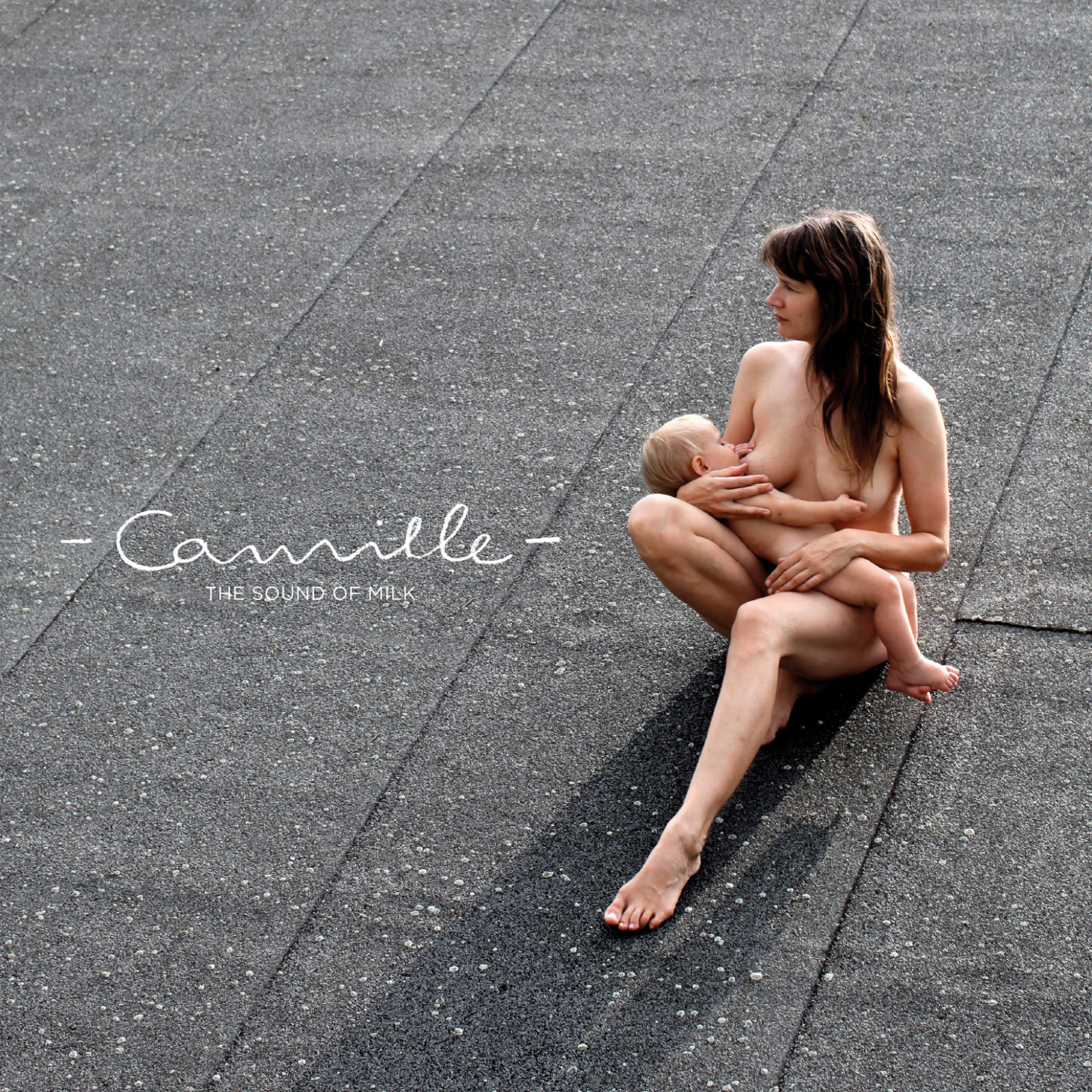
The Sound of Milk
- Volume Naissance
The Sound of Milk - Naissance
- Volume Enfance
Laicoco - Enfance
12345 Toes - Enfance
Down the strairs - Enfance
J'ouvre la fenêtre - Enfance
Si tu souris aux anges - Enfance
Cosmic Information - Enfance
Missing Sock - Enfance
Banana - Enfance
Party Girl - Enfance
La Terre - Enfance
Perfect Love Story - Enfance
Une journée pour elle - Enfance
Valse pour Ninon - Enfance
If you want me - Enfance
Up the stairs - Enfance
Sleep my baby sleep - Enfance
No Miracle - Enfance
- Volume Adolescence
Le Voyage - Adolescence
Bonjour - Adolescence
Monsieur Garçon - Adolescence
A nos enfants - Adolescence
She's a Woman - Adolescence
GTB - Adolescence
La Terre - Adolescence
Belle - Adolescence
Si tu souris aux anges - Adolescence
No Miracle - Adolescence
L'air de rien - Adolescence
"Only joy consoles me, and it is my role as a human, as a woman, and as a mother to nourish it, to dream it, and to repair the world through song, making it vibrate again!"
Nine years after Ouï, Camille returns with a new album, The Sound of Milk (2026) — a unique project both in its creative process and its triptych form, comprising Naissance (2015), a sound diary; Enfance (2020), a pocket musical; and Adolescence (2025), a pop album.
In a time marked by social, political, and ecological turmoil, Camille chooses to speak of joy — powerful yet vulnerable — as well as femininity, motherhood, childhood, family in its broadest sense, and the transmission of music and enduring values. She asks: how do we live day-to-day in the face of today’s challenges? How do we care for children and for the inner child within each of us, for all living beings, for Life itself? What can we pass on to re-enchant the world?
Tender, lucid, and engaged, this album confronts humanity’s struggles and challenges while cradling us, awakening us to love, and reigniting the stars where they have dimmed.
The Sound of Milk is a musical fresco fifteen years in the making — the age of her eldest son — in which Camille explores the porous boundaries between her life as a mother of two children (her son and daughter), her family life, and her life as an artist, all while tracing the history of music.
It all begins with Naissance, recorded between 2010 and 2015. In her family home in Gascony, one summer, as babies and children babbled and squeaked together, sounds and songs emerged from her like a rising tide of milk. Camille recorded everyday moments with her two young children. This is where "the sound of milk" was born! According to her, everything vibrates and emits a melody, from the cells of our bodies to the planets in the universe. The result is a sound diary filled with voices and life — no musical instruments, no artifices — where maternal and feminine singing flows freely.
Composed of water, air, breath, lullabies, nursery rhymes, and melodies, this first chapter captures the poetry of her daily life as a mother — without idealization — including her joyful, playful dynamics and rituals. Camille cares for her children here, encouraging them to sing the world. Transmission occurs from the very beginning: the baby, a master of sound and song, initiates the first melody that Camille then reprises. Each song becomes a caress, a gentle care for the ears and hearts of listeners.
A few years later comes Enfance, recorded between 2015 and 2020. The babies have grown into children, and the songs have grown with them. "The sound of milk" has become a parade of familiar hymns, enriched with choruses. In the living room and on the stairs of the same family home, surrounded by her children, nieces and nephews forming a choir, her partner Clément Ducol on vocal bass, and their friend, cellist Pierre-François Dufour, Camille orchestrates, revisits, and sings these familiar tunes, adding new refrains to create a “pocket musical.”
Recorded live by Camille herself, this second chapter reconnects with the acoustic song she loves: captured in the moment, in one take, meaningful because it is not overly controlled. It brings together tender and rhythmic songs, serious, joyful, and sparkling, tinged with blues, folk, jazz, and swing — “flowing like whey” she says. Camille nods to The Sound of Music, Robert Wise’s 1965 musical film, set in Austria on the eve of World War II, which gathers all she cherishes: forest and mountains, reinvented family, joy, and enduring faith guiding us despite rising fascism.
With it, she continues to explore the sound-love equation. She reflects on her children and all others — including her own inner child — the beauty and difficulties of daily life, her joys, fears, and maternal anxieties, and Mother Earth in need of our care. She celebrates the unconditional love that resides in her and connects to her children, humanity, and the planet. Camille does not define motherhood; she sings it. Her music traces a living memory nourished by mothers who “hold the eternal,” as writes one of her favorite poets, Christian Bobin.
Finally, Adolescence, recorded between 2020 and 2025, comes to life. Camille wants to evolve the project. She keeps three songs from Naissance and Enfance and adds new ones. Her children enter adolescence — and she feels she is living another herself. Returning from the United States, her gaze, still tender, becomes politicized. She invites Clément Ducol to co-produce ten decidedly pop songs with her. In their studio on the top floor of their home, she brings together their musical family: their children trained in singing, piano, flute, and orchestral percussion; longtime friend Martin Gamet on bass; Christophe Mink on harp; Pierre-François Dufour on cello; sound engineers Aristide Rosier and Noé Bonnaillie; and their dog, lending its panting to a drum machine! This third chapter emphasizes 21st-century pop music, concluding the musical journey that began with sound and song (Naissance) and passed through acoustic music (Enfance).
It opens with Le Voyage, a song composed by her Californian friend Diane Warren, in which Camille recounts her family’s initiatory stay in Los Angeles, witnessing the Oscars race and California’s devastating wildfires in 2025. GTB (Génération tête baissée) questions the screens that separate us and distract us from the sky. La Terre reminds us who we are and where we come from, hinting at life without our precious planet, the only refuge for love. Si tu souris aux anges and No Miracle, addressed to her daughter and son respectively, are songs of gratitude spanning all three chapters — one urging us to rekindle the divine spark within, the other revealing the love that came with her son, her first child, continually growing and giving to the world.
More than a professional singer — a label she has never fully claimed — Camille is a woman who sings with the talent and generosity of great creators touched by grace. She seeks the vibrating note, the sacred sound. She returns to the origin of singing, its fundamental function as prayer, gently awakening us to the piece of heaven within, to Mother Nature, and to our fellow humans. In this, she invites us to connect to the great source of Love available to all. With The Sound of Milk, Camille bares herself and offers an album in her own image: engaged, spiritual, free, and alive.
— Audrey Fella